


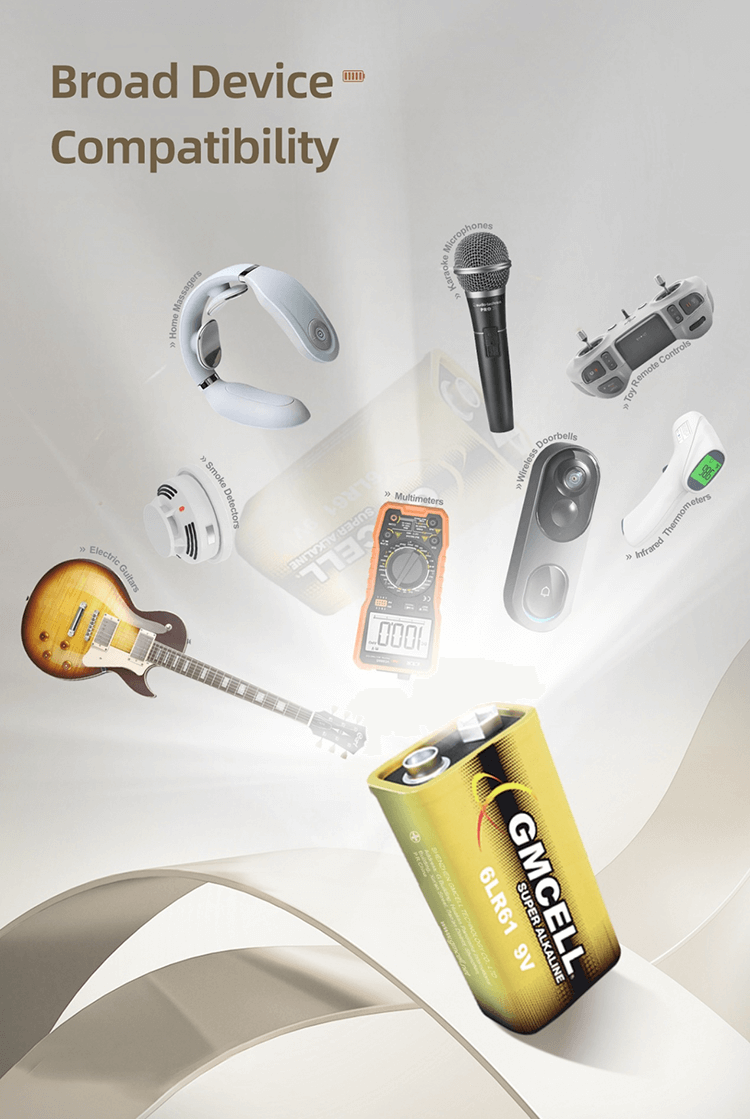
Image Source: GMCELL
You might grab a 9V Battery when your smoke detector beeps. You also use one if your favorite toy stops working. Sometimes, your portable radio needs new power too. The right battery helps your devices work well and stay safe.
- Smoke detectors
- Toys and remote controls
- Alarm clocks
Tip: Old or expired batteries can leak or get rusty. They might even stop your device from working. Always look for swelling or rust on batteries.
Here’s a quick look at the types you may want to keep nearby:
|
Battery Type |
Key Features |
Best Uses |
|
Alkaline |
Cheap, lasts a long time in storage |
Low-power gadgets |
|
Disposable Lithium |
Lasts longer, works in hot or cold places |
High-power devices |
|
Rechargeable |
Good for the planet, can use again |
Devices you use a lot |
Key Takeaways
- 9V batteries are important for smoke detectors. They help keep your home safe. Change them once a year or when you hear beeping.
- Many portable electronics need 9V batteries. Toys and radios are some examples. Rechargeable batteries can help you save money. They also make less trash.
- Some home testing devices use 9V batteries. Multimeters and stud finders are two examples. Check and change the batteries often. This helps these tools work well.
9V Battery in Smoke Detectors
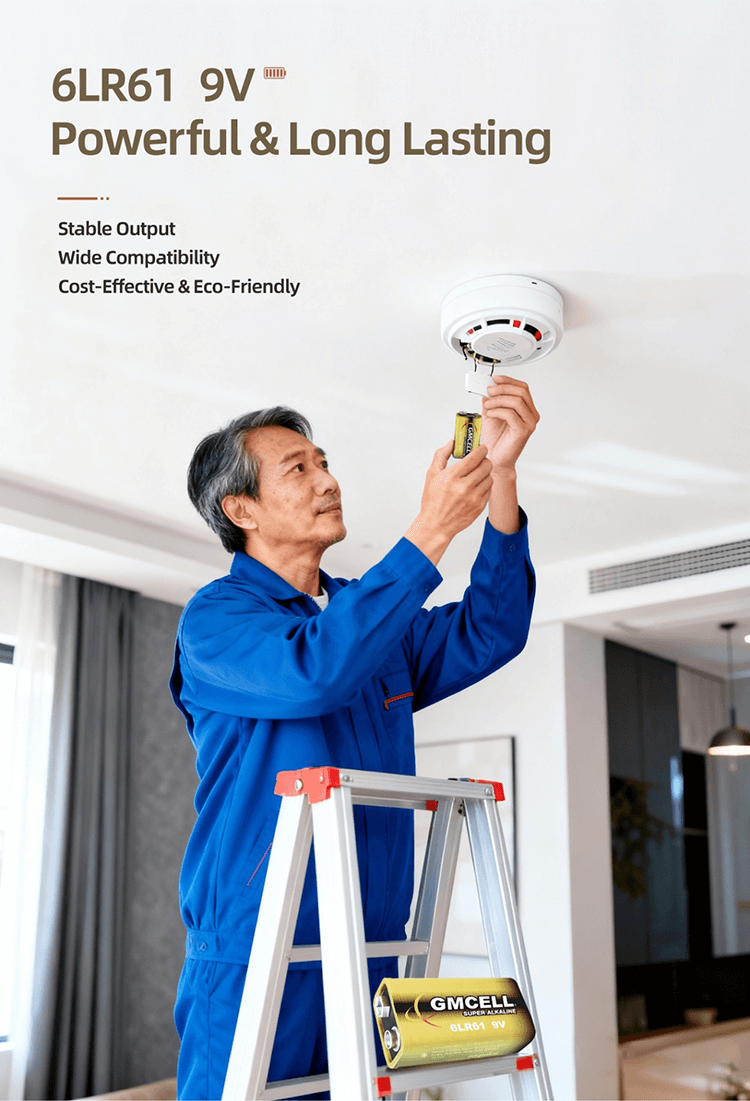
Image Source: GMCELL-9v-battery
Why Use a 9V Battery
You see 9V Battery as the go-to choice for smoke detectors in most homes. Why? Here are a few reasons:
- 9V batteries are affordable, so you don’t have to spend much to keep your smoke alarms working.
- You can find them almost anywhere—grocery stores, hardware shops, or even gas stations.
- Their shape fits perfectly in most smoke detector slots, making installation easy.
A 9V Battery gives steady power for your smoke detector. Alkaline types usually last 6 to 12 months. They may not last as long as lithium batteries, but they work well and cost less. If you want a battery that lasts longer, lithium 9V batteries can keep your smoke detector running for up to ten years. That means fewer battery changes and more peace of mind.
How to Replace Safely
Changing a smoke detector battery is simple, but you should always stay safe. First, stand on a sturdy chair or step stool. Twist or slide the smoke detector cover off. Remove the old battery and check for any rust or leaks. Pop in the new 9V Battery, making sure the connectors line up. Close the cover and press the test button to hear a beep. That sound means your smoke detector works.
Tip: Always check the expiration date on your battery before you install it.
Safety Maintenance Tips
You want your smoke detector to protect your family. Here’s how you can help:
- Test your smoke detector every month by pressing the test button.
- Replace the battery at least once a year, or sooner if you hear a chirp.
- If you use a lithium 9V Battery, you might only need to change it every 5 to 10 years.
- Keep your smoke detector clean and free of dust.
A working smoke detector gives you peace of mind. Dead or old batteries are a top reason smoke alarms fail. Stay safe by keeping your smoke detectors powered and ready.
9V Battery for Portable Electronics
Common Devices
You might use a 9V Battery in more things than you realize. Many small electronics need this battery to work. Some examples are radios, guitar pedals, and children’s toys. Walkie-talkies and portable speakers also use them. Emergency beacons and security systems need steady power too. Portable TVs, data recorders, and test devices often use 9V Batteries. These gadgets need good power to work right, whether you play music or listen to news.
Install 9V Battery
It is simple to put a 9V Battery in your device. Open the battery spot and find the snap connectors. Match the battery ends to the connectors. Press gently until you hear a click. Close the battery spot and turn on your device. If it does not work, check if the battery is new and put in right.
Tip: Rechargeable batteries can help you save money if you use your device a lot. They also make less trash, which is better for the planet.
Here is a quick look at how rechargeable and non-rechargeable batteries are different:
|
Feature |
Rechargeable NiMH 9V Batteries |
Non-Rechargeable Batteries |
|
Lifespan per charge |
6-12 months |
Varies |
|
Recharge cycles |
500-1,000 times |
N/A |
|
Good for frequent changes |
Yes |
No |
Battery Care Tips
You want your batteries to last a long time. Keep them in a cool, dry place at room temperature. Do not let them run out all the way—charge them before they drop below 20%. Always use the right charger for your battery type so they do not get too hot. These easy steps stop leaks and keep your devices working well.
Note: Storing and caring for batteries the right way helps them last longer and keeps your electronics safe.
Home Testing Devices with 9V Battery
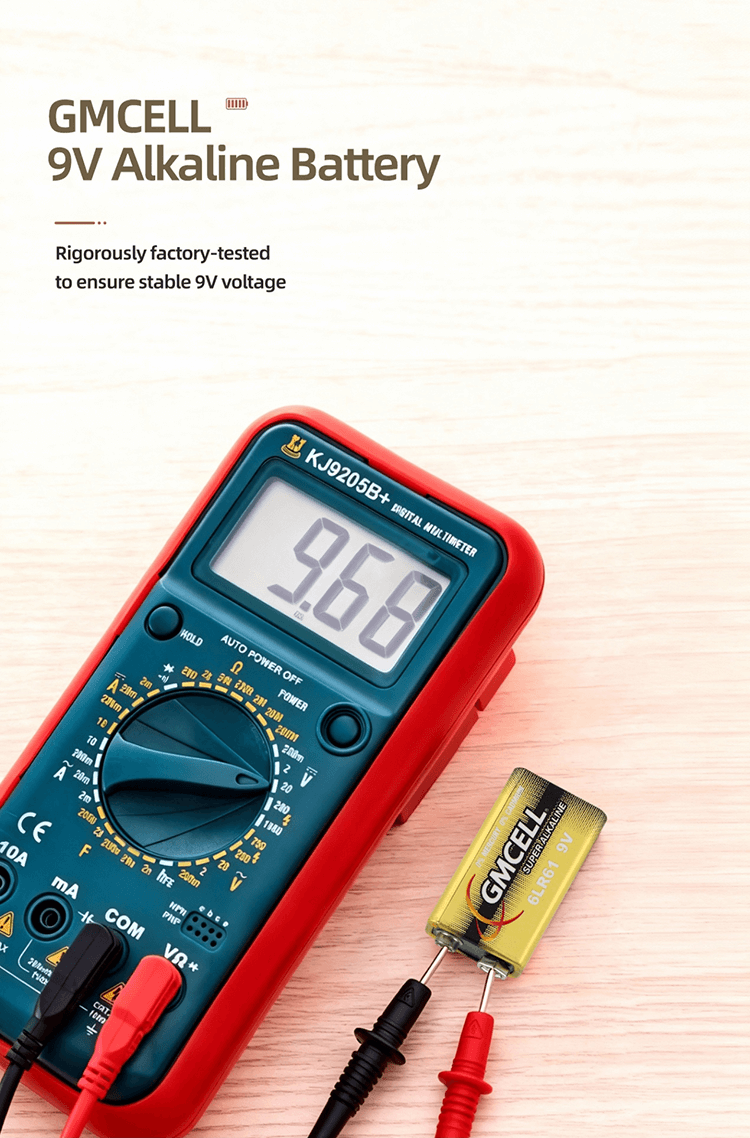
Image Source: GMCELL
Device Examples
You might use home testing devices more than you think. Multimeters help you check batteries, wires, and outlets at home. Stud finders show you where to hang a picture or put up a TV. Many of these tools use a 9V Battery for power. You can also find 9V batteries in laser levels, voltage testers, and some air quality monitors. These devices need steady power so they can give you the right results.
Powering and Troubleshooting
Sometimes your device will not work. You can try a few simple steps to find out why:
- Use a multimeter to check the battery voltage. If it shows less than 7 volts, the battery may not have enough power.
- Put the battery in another device that you know works. If it still does not turn on, the battery is probably dead.
- Check for leaks, swelling, or rust on the battery. If you see any of these, change the battery right away.
Tip: If your device acts strange or will not turn on, check the battery first. A new battery can often fix the problem.
Choosing the Right Battery
Picking the right battery helps your device last longer and work better. Here is a quick look at your choices:
|
Battery Type |
Disadvantages |
|
|
Alkaline |
Reliable, lasts long in high-drain devices |
May not work well in extreme heat/cold |
|
Lithium |
Works in many conditions, lasts longest |
Costs more |
|
Rechargeable |
Saves money, eco-friendly |
May lose charge faster, lower voltage |
Most devices work well with alkaline or lithium batteries. If you use your tester a lot, rechargeable batteries can help you save money. Always check how long the battery will last on the shelf. Lithium batteries can last up to 5 years in storage. Alkaline batteries last about 3 years. Pick trusted brands and look for safety features like overcharge protection and thermal regulation.
Here’s a quick recap of the top 3 uses for 9V batteries at home:
|
Use |
Why It Matters |
|
Keeps your family safe |
|
|
Clocks |
Powers wall clocks, even in hard-to-reach spots |
|
Audio Gear |
Runs guitar pedals and wireless mics |
Check your batteries every year. Swap them out if they’re old or weak. Keep a mix of alkaline, lithium, and rechargeable 9V batteries handy—this helps you stay ready for emergencies and everyday needs.
FAQ
How do I know when to change my 9V battery?
You should change it if your device beeps, stops working, or the battery looks rusty or swollen. Test your devices every month.
Can I mix different brands of 9V batteries?
No, you should not mix brands. Mixing can cause leaks or damage. Always use the same brand and type in one device.
Are rechargeable 9V batteries safe for all devices?
Most devices work with rechargeable 9V batteries. Check your device manual first. Some smoke detectors need only alkaline or lithium batteries.
Post time: Jan-16-2026

