

Years Experience
Workers (incl. QC & R&D)
Global Customers
Major Certifications
Direct Manufacturer & Source Factory
Established in 1998, GMCELL is a high-tech battery enterprise focusing on design, production, R&D, and sales. We emphasize our identity as a 'Direct Manufacturer' rather than a middleman. Global buyers looking for reliable supply chain transparency can access high-performance disposable batteries and next-generation 1.5V AA/AAA lithium rechargeable batteries directly from our ISO9001:2015 certified facility.
Our state-of-the-art manufacturing facility covers 28,500 sqm and hosts over 1,500 employees, including 35 dedicated R&D engineers and 56 quality control members. With a monthly output exceeding 20 million pieces, we ensure seamless scalability and strict compliance management for B2B partners across 100+ countries. Visit our main portal at GMCELL to learn more.


EU & North American B2B Compliance Matrix
Importing batteries into strictly regulated markets requires robust, verified documentation. We provide comprehensive compliance support tailored to your specific market demands.
UN38.3 Test Summaries
Essential for all lithium cell and custom battery pack shipments. We supply UN38.3 test reports along with comprehensive lithium battery test summaries to facilitate smooth air, sea, and land logistics.
IEC 62133-1 / IEC 62133-2
Critical for international product safety compliance. IEC 62133-1 covers nickel systems, while IEC 62133-2 governs secondary lithium systems. Certification is provided on a model-specific basis.
IEC 60086 Series
Compliance framework for primary dry cells (alkaline, carbon-zinc, lithium button cells). Ensures physical dimensions, electrical performance, safety, and environmental impact meet international thresholds.
EU Regulation 2023/1542
The new EU Battery Regulation mandates strict sustainability, carbon footprint reporting, digital battery passports, performance metrics, and end-of-life recycling compliance for products entering the EU market.
RoHS & REACH
Verification that our batteries restrict hazardous substances (lead, mercury, cadmium) and comply with SVHC (Substances of Very High Concern) reporting requirements for EU importers.
SDS / MSDS & CE/DoC
Safety Data Sheets (SDS) for safe handling and transportation, alongside CE Declarations of Conformity (DoC) stating compliance with relevant European directives.
Important Note: Certification compliance is model-specific. Not every battery size or chemistry carries every certification by default. Please contact our technical team to verify specific documentation availability for your selected model or custom pack.
Product Portfolio & Compliance Coverage
Explore our diverse battery range engineered to meet strict technical specifications and safety benchmarks for industrial and consumer applications.
Alkaline & Carbon-Zinc Cells
High-capacity primary batteries (AA, AAA, C, D, 9V). Compliant with IEC 60086-1/2/5 standards, heavy-metal free directives, and EU packaging regulations.
Common Files: MSDS, RoHS, REACH, IEC 60086
Lithium & Alkaline Button Cells
CR and LR coin cells for medical devices, IoT, and precision electronics. Child-resistant packaging options available to meet North American safety laws.
Common Files: UN38.3, MSDS, IEC 60086-4
Ni-MH Rechargeable Batteries
Eco-friendly, high-cycle life nickel-metal hydride cells. Suitable for consumer electronics and industrial applications requiring cyclic reliability.
Common Files: IEC 62133-1, CE, MSDS
1.5V Lithium Rechargeable Cells
Next-generation 1.5V AA/AAA rechargeable lithium cells with integrated USB-C charging ports or contact charging, providing stable voltage output.
Common Files: UN38.3, IEC 62133-2, CE, RoHS
USB-C Integrated Cells
Direct charging cells with built-in protection circuit modules (PCM) to prevent overcharge, over-discharge, and short-circuit conditions.
Common Files: UN38.3, IEC 62133-2, CE-EMC
Custom Battery Packs
Tailored lithium-ion or Ni-MH configurations designed for OEMs. Includes custom casing, smart BMS integration, and application-specific safety reviews.
Common Files: UN38.3, Custom IEC 62133-2, SDS
Advanced Manufacturing & Testing Infrastructure
Take a closer look at our production floor, testing labs, and storage facilities that guarantee consistent quality and compliance.

R&D Testing Lab
Equipped with distribution cabinets and temperature chambers to verify performance and safety characteristics.

Automated Production
High-speed, automated assembly lines that minimize human error and ensure uniform cell build quality.

Compliance Warehouse
Temperature and humidity-controlled storage ensuring batch traceability and raw material integrity.

R&D Safety Lab
Dedicated facilities for abuse testing, short-circuit simulation, and thermal stability checks.
Rigorous 5-Step Quality Control & Traceability
Our quality management system is structured to guarantee that every batch meets the performance and compliance standards expected by EU and North American B2B buyers.
Raw Material Inspection
Incoming inspection of active chemicals, steel casings, and protection circuits to verify compliance prior to assembly.
Automated Assembly
In-line optical sensors and voltage monitoring systems track cell assembly parameters in real time.
100% Aging Test
Every cell batch undergoes controlled storage testing to detect voltage drops, internal resistance shifts, or micro-leaks.
Final QA Verification
Random sampling based on AQL standards for electrical performance, physical dimensions, and safety testing.
Compliant Packaging
Final packaging includes required warning labels, batch codes, recycling symbols, and shipping documentation.
OEM Compliance & Traceability Management
For private-label brands and OEMs, compliance is a dynamic process. When you modify a battery pack's layout, protection board (BMS), or cell chemistry, existing certifications may become invalid. At GMCELL, we assist our partners through the necessary delta-evaluations and re-certification pathways.
We maintain strict batch-level traceability. From raw material ingestion to the final shipment, each batch is assigned a unique tracking code. This ensures that in the rare event of a quality deviation, containment and root-cause analysis can be executed swiftly, protecting your brand's reputation in highly regulated markets.
Custom Pack Development Process
- Step 1: Technical Spec Definition (Voltage, capacity, space envelope, and target markets).
- Step 2: Prototype & Pre-testing (Internal testing in our R&D lab for thermal and electrical performance).
- Step 3: Certification Strategy (Identifying relevant IEC, UN38.3, or CE requirements for the final pack).
- Step 4: Mass Production & QA (Implementing dedicated test fixtures for continuous quality assurance).
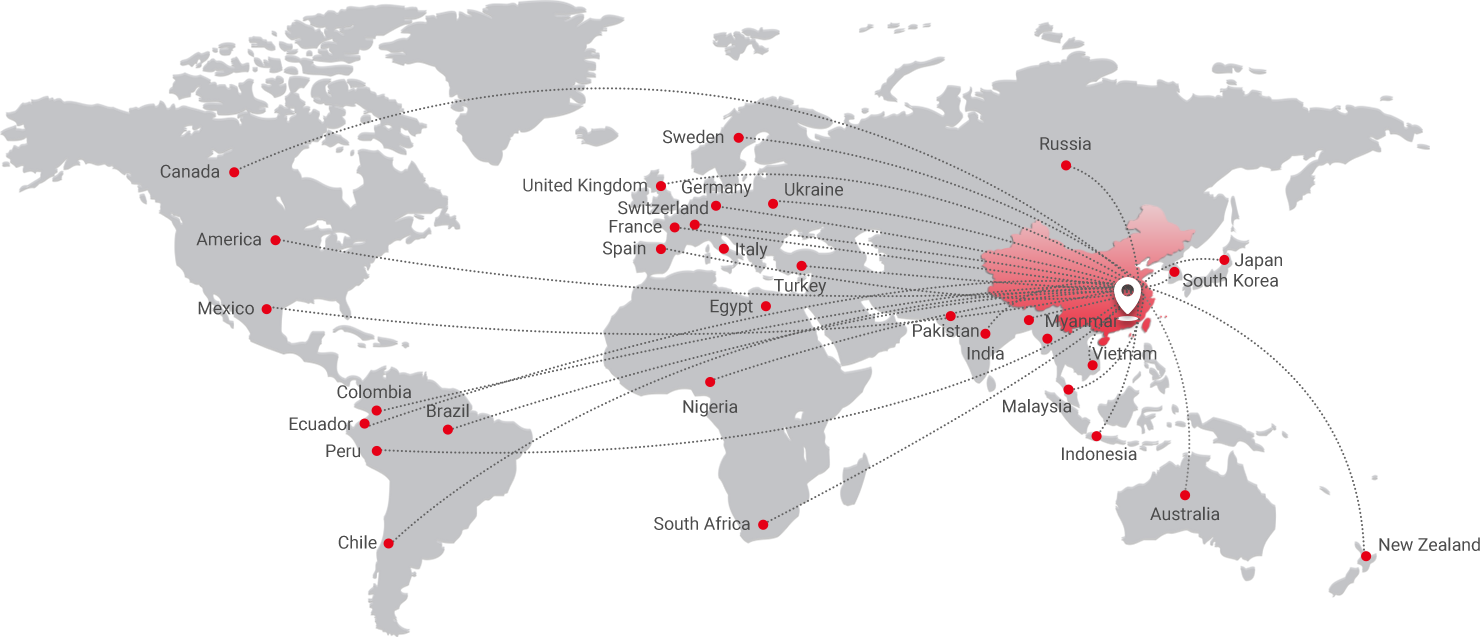
Our Partners & Market Footprint
GMCELL batteries are designed to meet diverse energy needs across multiple industries, serving partners and customers in over 100 countries.
Frequently Asked Questions
Common questions from B2B importers, distributors, and OEMs regarding battery compliance and testing.
How do I know which certificates apply to a specific battery model?
Certifications are model-specific and depend on the battery's chemistry, size, and intended application. Please request a technical data sheet (TDS) for the specific model you require, and our compliance team will provide the current list of certifications.
What is the difference between IEC 62133-1 and IEC 62133-2?
IEC 62133-1 specifies safety requirements for portable sealed nickel systems (like Ni-MH), whereas IEC 62133-2 focuses specifically on secondary lithium systems (like Lithium-Ion and Lithium Polymer cells and packs).
How does the new EU Battery Regulation 2023/1542 affect importers?
Importers must ensure that batteries entering the EU comply with new labeling, durability, and carbon footprint limits. We are actively updating our processes to support our EU partners in meeting these evolving requirements.
Can we use GMCELL's UN38.3 test summaries for our air freight?
Yes. We provide verified UN38.3 test summaries for all our lithium-based cells and custom packs. These documents are required by airlines and freight forwarders to verify the safety of lithium battery shipments during transit.
What happens if we customize a battery pack's housing or BMS?
Any structural or electrical change to a certified pack usually requires a delta-evaluation. We can help you assess the impact of these changes and coordinate with testing laboratories to update the certifications.
Are SDS/MSDS reports updated annually?
Yes, we update our Safety Data Sheets (SDS) and Material Safety Data Sheets (MSDS) regularly to comply with the latest GHS and international transport regulations (IATA, IMDG, ADR).
Ready to Secure Your Battery Supply Chain?
Get in touch with our compliance engineers to request test summaries, model-specific certificates, SDS sheets, or custom pack evaluations.
Request Compliance Files
